Blogs
Evidence of Values in Action

Workplace culture is often talked about as something abstract. It lives on posters, careers pages, and internal slide decks. But in reality, culture is built in everyday moments. It shows up in how people treat each other, how they work together, and which behaviours are noticed and appreciated.
One of the most effective ways to understand what culture actually looks like inside an organisation is through recognition shared between colleagues.
Recognition shows what values really look like
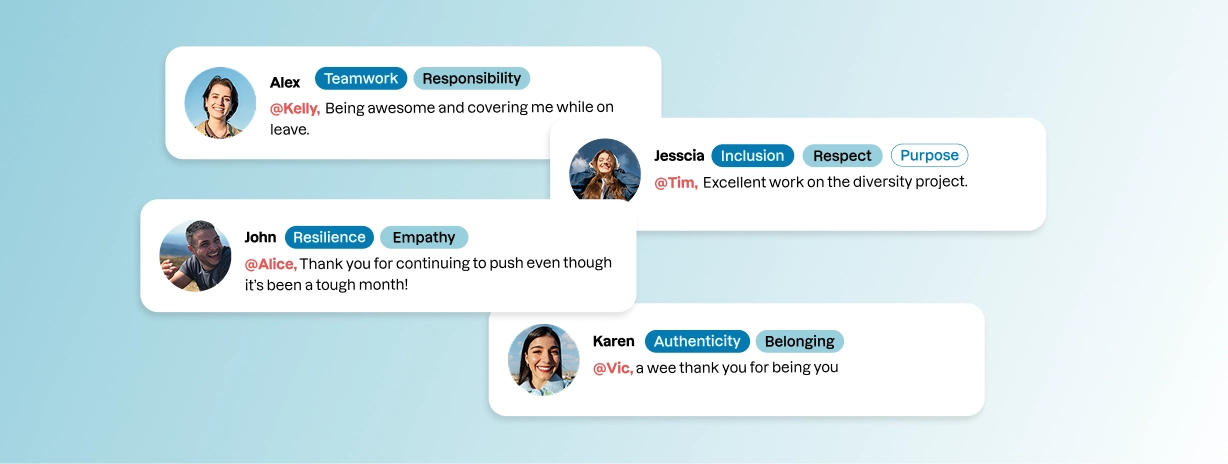
Recognition messages are more than feel-good notes. They are real-time signals of what an organisation values in practice. When people recognise each other, they tend to call out specific actions and behaviours, not vague praise. Over time, these moments create a clear picture of how values are being lived across the business.
For example:
Why this matters more than ever
Recognition does not just feel good. It has a direct impact on how people show up at work. Research from Sociabble’s 2024 Employee Recognition Statistics found that over 80 percent of employees say recognition directly impacts their motivation and performance. When people feel seen and appreciated, they are more engaged, more committed, and more likely to repeat the behaviours that earned that recognition in the first place.
This is where recognition becomes powerful. It moves from being a nice extra to a meaningful driver of performance and engagement.
Recognition as a mirror of culture
When used intentionally, recognition becomes a real-time mirror of workplace culture. It shows leaders what behaviours are being reinforced, which values are showing up most often, and how culture is being experienced across teams and roles.
Instead of relying solely on surveys or annual reviews, organisations can use recognition data to understand culture as it happens. This gives leadership practical insight, not just assumptions, and helps them make better decisions about where to focus their efforts.
Making culture visible and measurable
By connecting recognition to company values and ways of working, organisations can do more than celebrate good work. They can reinforce the behaviours they want to see more of, create alignment across teams, and make culture visible in a measurable and meaningful way.
At its best, recognition turns everyday moments into evidence. Evidence of values in action, evidence of what drives performance, and evidence of the culture an organisation is actively building.
And that is where recognition stops being just a message, and starts becoming a strategy.
To learn more about Peer-to-Peer Rewards and Recognition
Sociabble (2024), Employee Recognition Statistics: Why Recognition Drives Engagement and Performance. https://www.sociabble.com/blog/employee-engagement/employee-recognition-statistics/
Extra Resources

Blogs
Strengthening Ways of Working Through Recognition
Culture lives in the everyday moments at work. Peer-to-peer recognition shines a light on these behaviours and reinforces them.